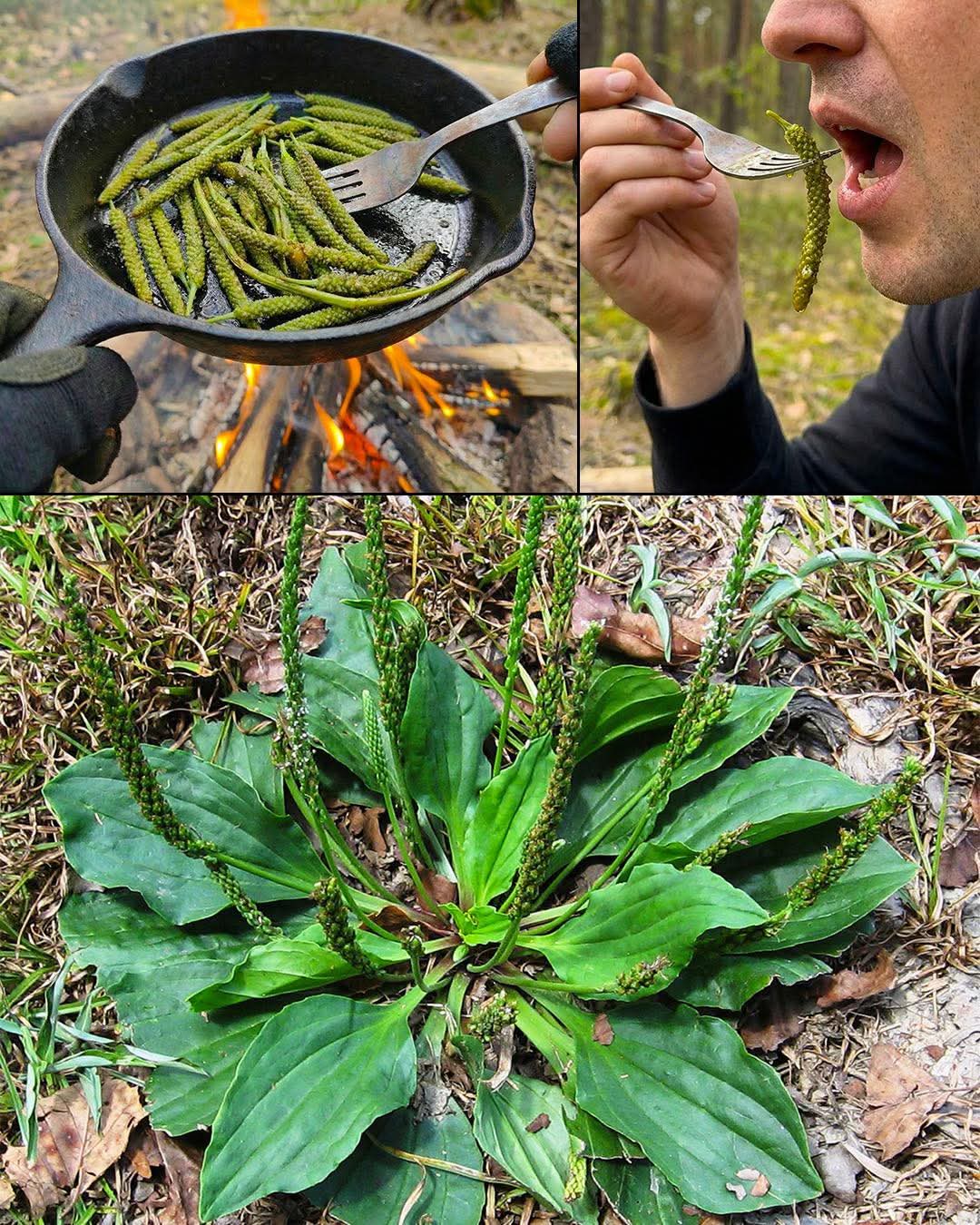
Why the flowering shoots can be a smart edible choice
1) Nutrients you can reasonably expect
Plantain is not a “miracle food,” but it is a real green plant with a typical wild-edible profile:
Fiber (especially in older leaves and older shoots)
Micronutrients commonly found in leafy plants (vitamins and minerals vary with soil and season)
Antioxidant compounds (polyphenols and related plant chemicals)
The shoots are generally milder than mature leaves, and because they’re eaten as a vegetable-style side, they can be an easy way to add variety and plant compounds to a meal.
2) Plant compounds that explain its traditional “medicinal” reputation
Broadleaf plantain contains several classes of compounds that are widely discussed in herbal medicine traditions and investigated in lab research:
Mucilage (a soothing, gel-like soluble fiber)
Tannins (astringent compounds)
Iridoid glycosides (often highlighted for anti-inflammatory activity)
Flavonoids and phenylethanoid glycosides (antioxidant/anti-inflammatory potential)
These don’t “guarantee” a medical effect when you eat a serving, but they help explain why plantain has long been used for soothing irritated tissue and supporting skin recovery.