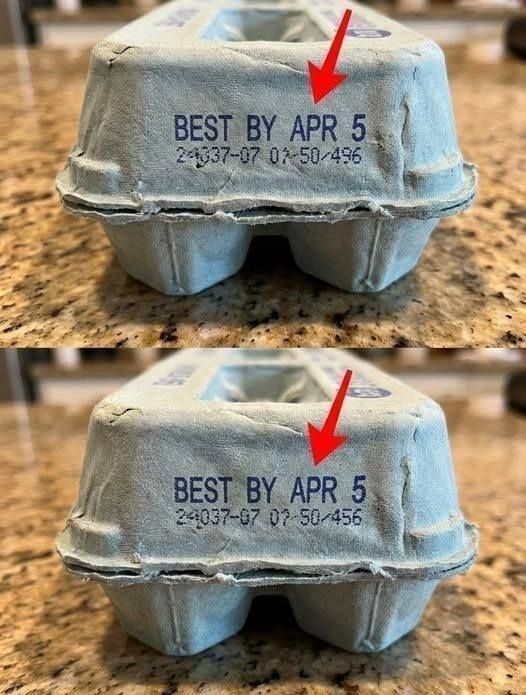
You’ve seen it—probably a hundred times. That mysterious three-digit number stamped on the side of your egg carton. Maybe you thought it was a batch code, a price lookup, or just random packaging noise.
But that number? It’s actually your best clue to freshness and safety—and ignoring it could be why your quiche left everyone feeling “off.”
Let’s decode what those numbers really mean—and how to use them to avoid foodborne illness.
The Three-Digit Number: It’s the Julian Date!
That number (usually between 001 and 365) is the Julian date—the day of the year the eggs were packed.
001 = January 1
032 = February 1
365 = December 31
So if your carton says “120”, the eggs were packed on April 30 (the 120th day of the year).
Important: This is NOT the expiration date—it’s the pack date.
How Long Are Eggs Safe to Eat?
According to the USDA:
Raw eggs in the shell are safe for 3–5 weeks after the pack date—even if the “sell-by” date has passed.
Always refrigerate eggs at or below 40°F (4°C). Room temperature drastically shortens shelf life.
Critical tip: The “sell-by” or “best-by” date on the carton is not a safety cutoff—it’s for store inventory. The Julian date is what matters.
Why Your Quiche Made Everyone Sick:
continued on next page